Speaker grille

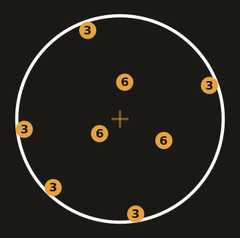

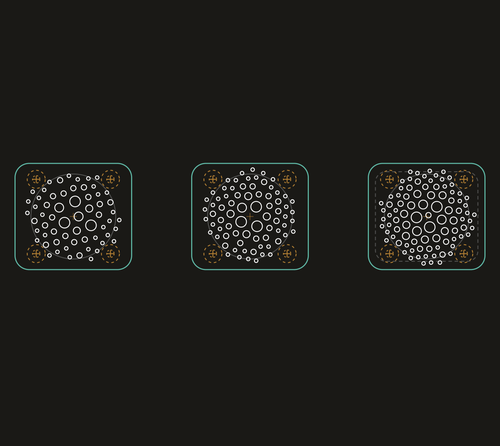
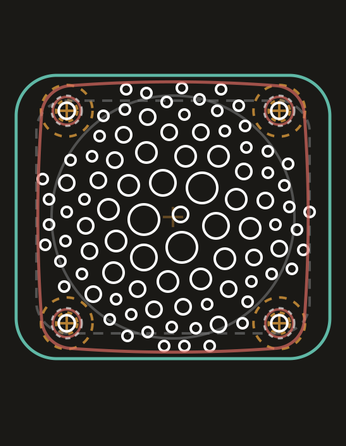
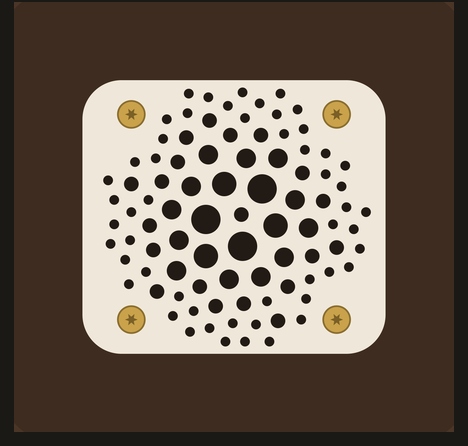
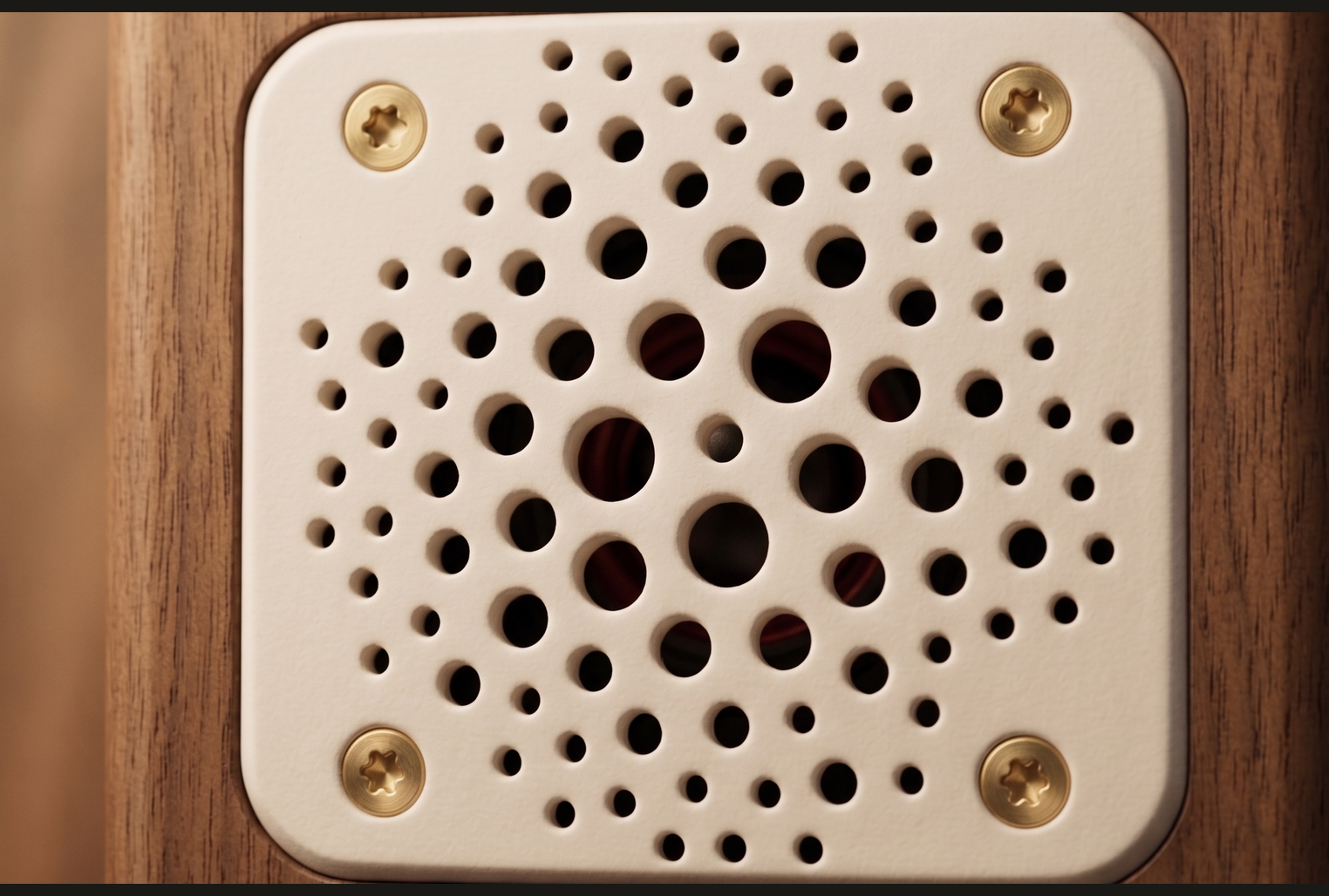
A real part, engineered while it was designed: a grille for real speakers that has to transmit sound perfectly, stay safe for toddler fingers, and come off for cleaning and service. It started as one rough 48 mm circle and a pin note — “6 mm holes center, 3 mm toward the edges” — and the agent computed the 90-hole field with 3 mm webs, verified in the file. One pin round — and a lot of debate about the physics — because every hole size is an acoustics and safety decision, not decoration. The flange, standoffs, and screw bosses came in the same pin loop, and because the result is plain SVG geometry it accepts any manufacturing technique — and invites community mods. Claude built the print mesh straight from that geometry: two minutes to a printable part, no Fusion modeling at all. Gemini rendered the locked stencil in walnut, bone, and brass — same split as everywhere on this page: vector studio makes the geometry, Gemini makes the picture — the picture is eye candy; the geometry is the product. Ninety holes of varying sizes is time-consuming for a human to design and manage alone — here it was a sentence and a handful of pins.


Landscape — storyboarding from a plan view
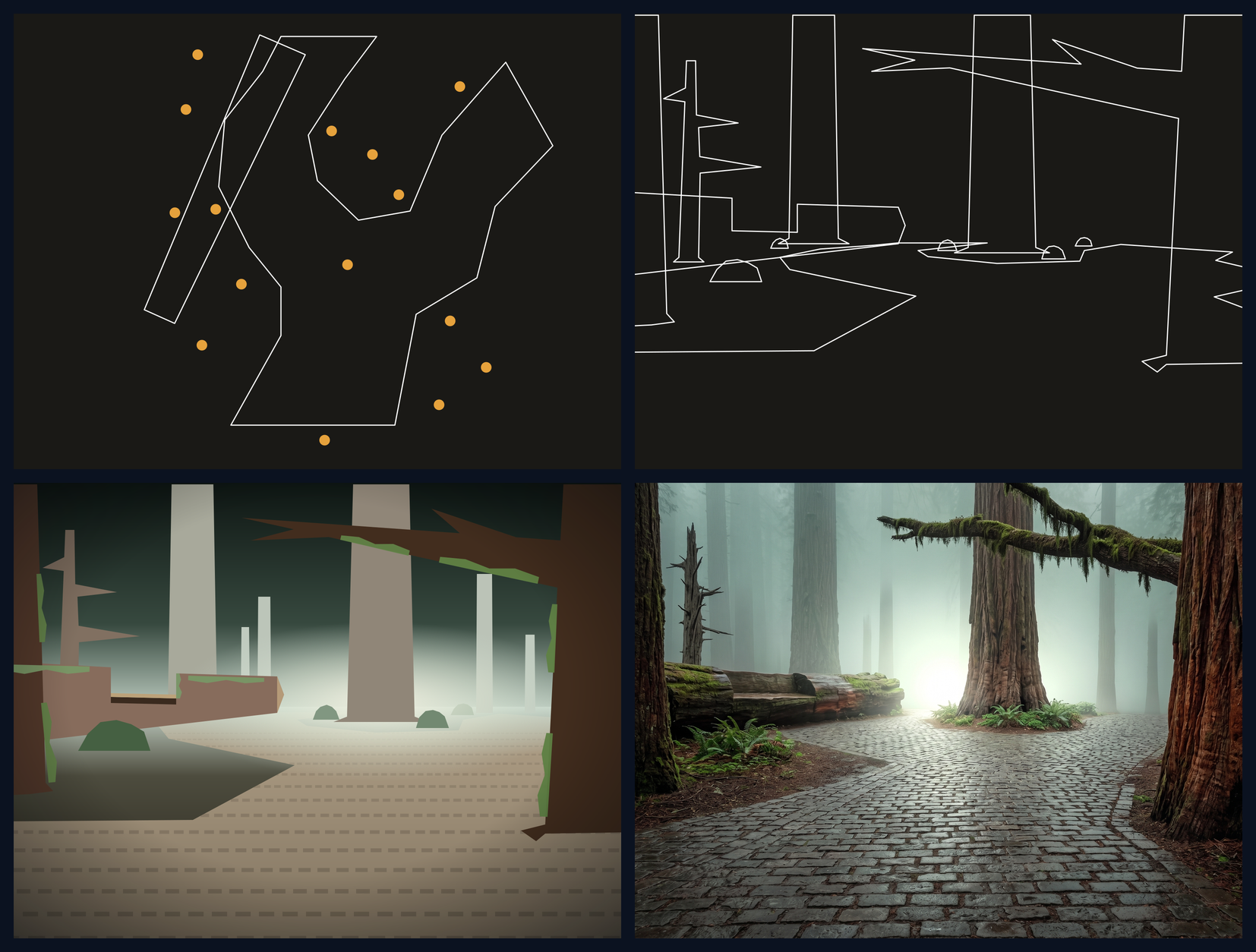
Built for storyboarding, where the hard problem is holding one viewpoint across scenes. So the scene starts as a plan view — trees as dots, the path as a polygon — and the agent interprets that map from a human perspective into the line work; fills follow, and Gemini renders the frame. Because the camera is derived from the plan, the next scene reuses the same map and stays consistent. Quick, and extremely powerful — and since every tree is its own shape, the same file also splits into a five-layer parallax.


Snowflake — a first-timer's first drawing
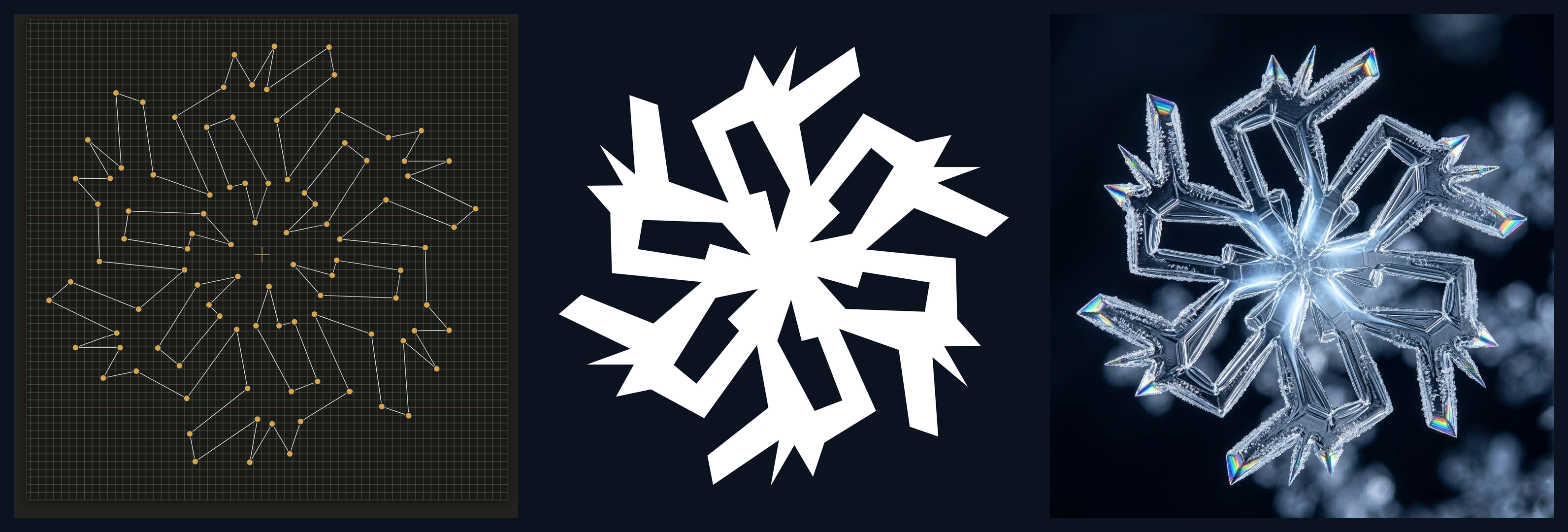
My wife’s first drawing in the tool — and her first in any vector, CAD, or photo-editing software. The instructions were one sentence: draw one side of a snowflake and mark the center. The agent mirrored and arrayed her arm into full six-fold symmetry; the filled silhouette is exactly that geometry. To be plain about the split: the ice render is Gemini’s — vector studio makes geometry, not renders.


The gadz.tech logo — a known design
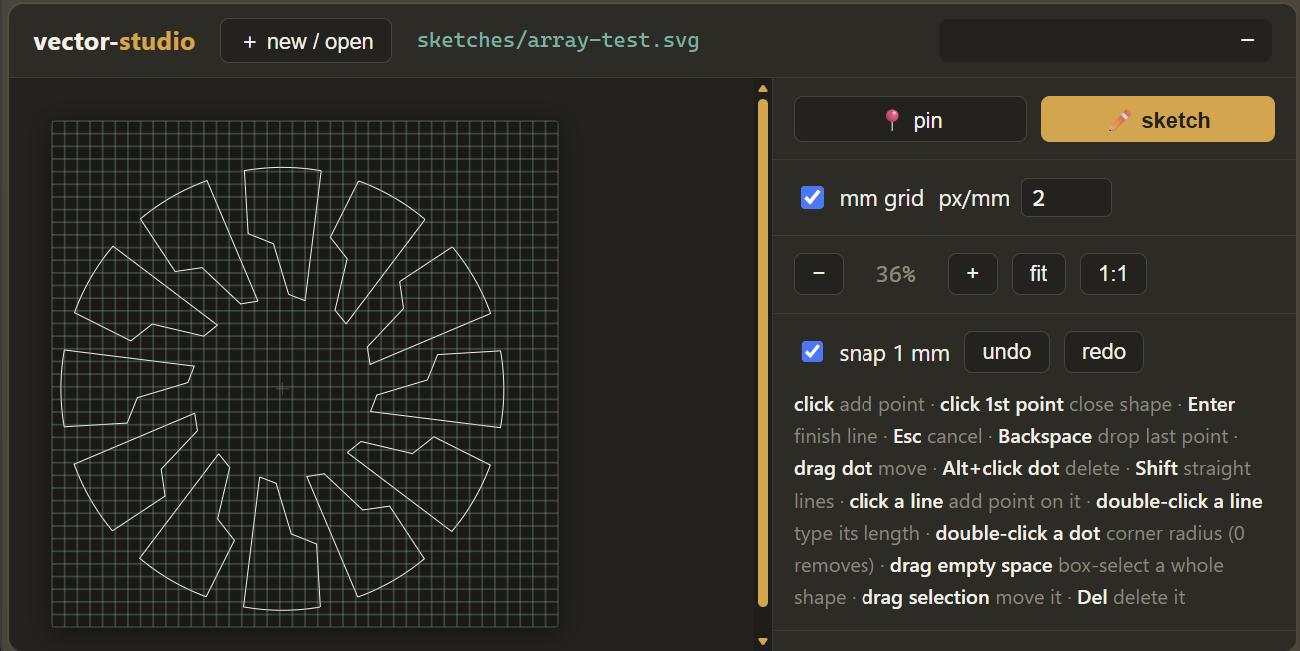
This shape is why the tool exists — it’s the gadz.tech logo, rebuilt as a test against a design that already existed. The original took three hours of describing the shape to a chat session, then Fusion work out of frustration, with the wrong file back three times. In vector studio it took two or three minutes: one wedge on the mm grid, the agent placed the other eleven — and once it lived as clean geometry, animating it was the fun part. The fix wasn’t a better description; it was pointing at geometry instead of describing it.
Gear — a dev-era test
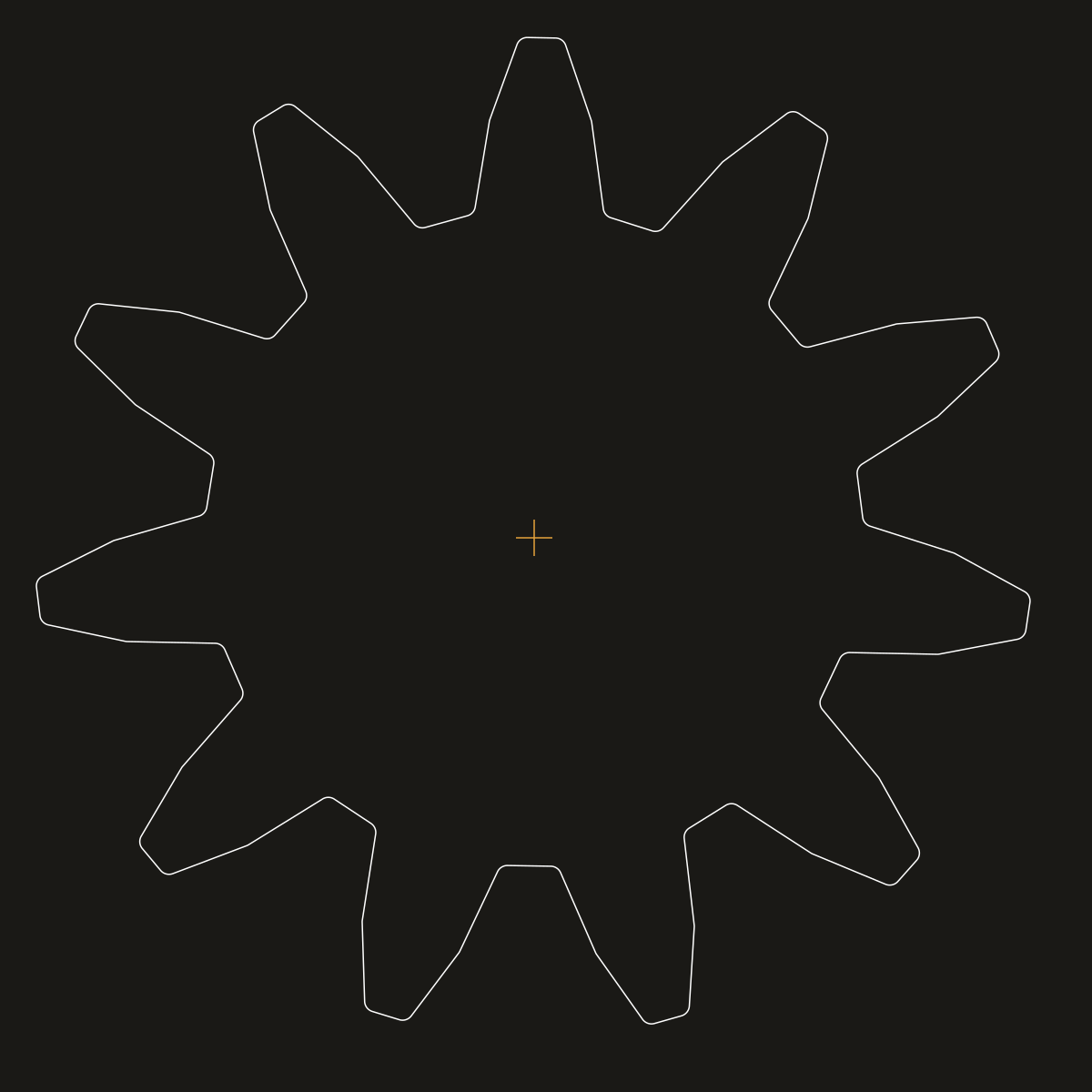
A test from while the tool was still being built — and a passed one. The gear was drawn to check that the sketch-and-pins model held up on a shape with real repetition, and it did; the file is done, kept exactly as the test it was. Dev-era tests belong in a portfolio: they’re where a tool earns its trust.


App home screen — sketch to shipped
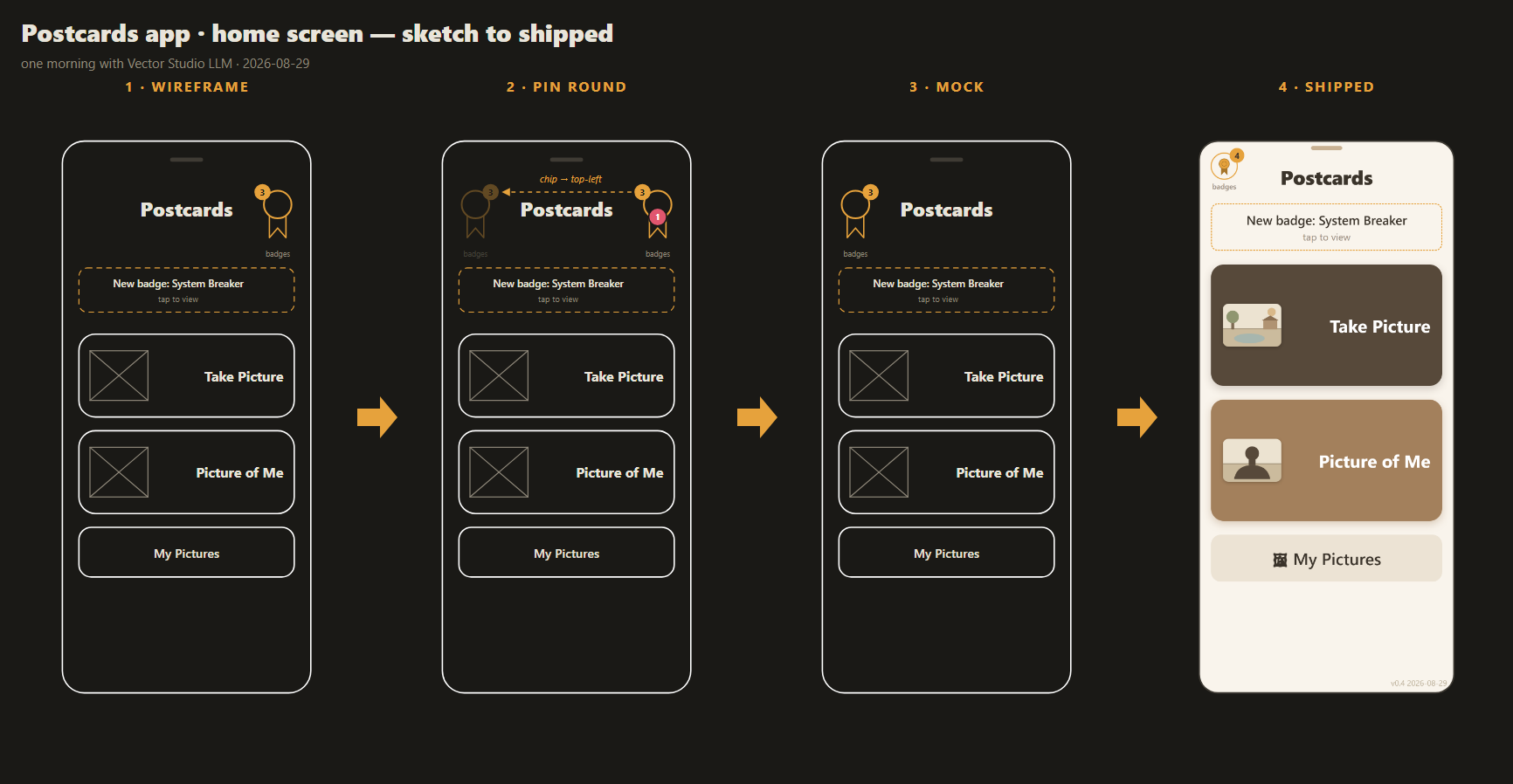
The closer, and the loop off the drawing board: a real app’s home screen went from wireframe to shipped in one morning. The wireframe is a vector studio sketch; the pin round is visible — “chip → top-left” — and the shipped screen honors it. UI is geometry too: the same pins that moved a speaker hole moved a badge chip.